
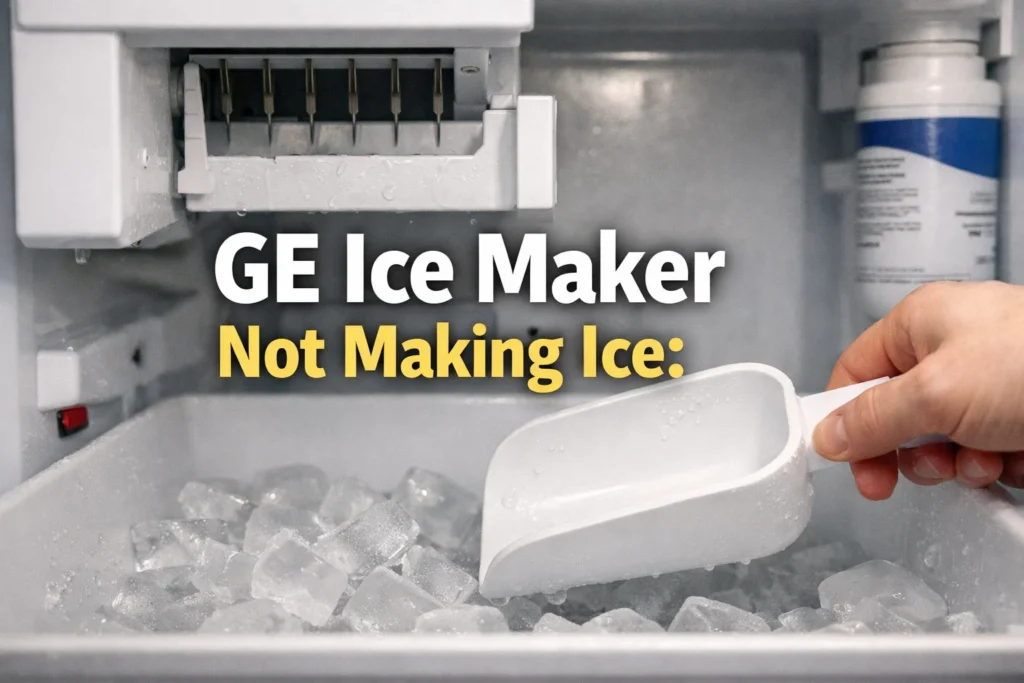
Few things are more annoying than opening the freezer expecting a full bin of ice—only to find nothing. The good news: most GE ice maker problems come down to a handful of common issues like temperature, water flow, frozen lines, or a simple reset. Below is a practical, step-by-step guide to diagnosing and fixing a GE refrigerator ice maker that isn’t producing ice.
Confirm the Freezer Temperature (Most Common Root Cause)
Ice makers don’t start cycling until the freezer is cold enough. Even if your freezer “feels” cold, a few degrees can make a big difference.
Target temperatures
- Fresh food compartment: 37°F (3°C)
- Freezer compartment: 0°F (-18°C)
- Ice maker cycling threshold: the ice maker typically needs the freezer to reach about 16°F (-9°C) (or colder) to begin a harvest cycle.
Quick checks
- Place a thermometer in the freezer for a few hours (don’t rely only on the display).
- If the freezer is above 5°F, lower the setting and wait for stabilization.
- Make sure vents aren’t blocked by food packages.
Pro tip: A nearly empty freezer warms up faster when the door opens. Keeping the freezer about ¾ full helps stabilize temperature and can improve ice production.
Make Sure the Ice Maker Is Actually Turned On
It sounds obvious, but it’s extremely common.
Depending on your GE model, “OFF” can happen via:
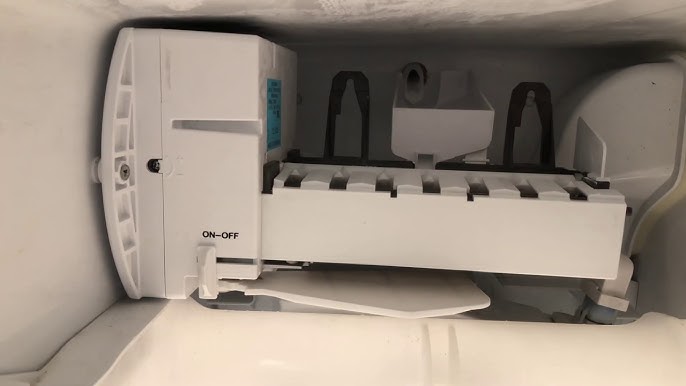
- A physical on/off switch
- A bail arm (wire lever) stuck in the raised/off position
- A control panel setting (sometimes tied to child lock or ice-off modes)
What to do
- Locate the switch/arm and confirm it’s in the ON/down position.
- Check the display for an “Ice Off” icon or setting.
Reset the Ice Maker (Clears Minor Glitches)
GE units can occasionally stop cycling due to a minor logic error. A reset is often enough.
Basic reset options
- If your ice maker has a reset button, hold it for 5–10 seconds.
- If there’s no reset button: unplug the refrigerator (or flip the breaker off) for 5 minutes, then restore power.
After resetting, give it time—ice production doesn’t resume instantly.
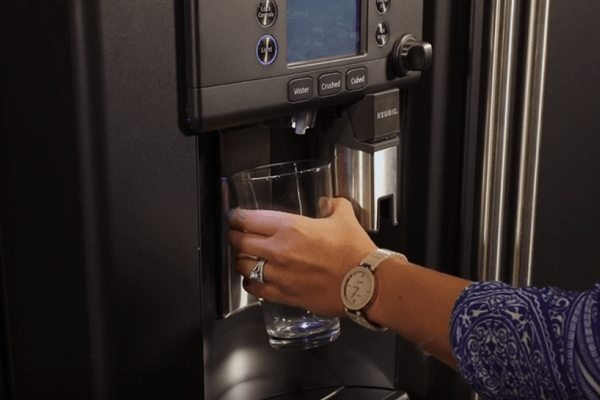
Check the Water Filter (Clogs Restrict Flow)
A restricted filter can reduce water flow enough that the ice maker can’t fill properly—or it may make small, hollow cubes.
What to know
- Replace the water filter about every 6 months, sooner if water flow slows.
- In areas with construction or sediment-heavy water, filters can clog faster than expected.
After replacing the filter
- Ensure the filter is seated and locked fully.
- Flush the system by dispensing water for a few minutes (this helps purge air and loose carbon).
Signs your filter is the culprit
- Slow water dispensing
- Small/hollow ice cubes
- Ice production suddenly stops after months of normal operation
Look for a Frozen Fill Tube or Water Line
Frozen lines are a classic issue, especially in side-by-side refrigerators or units set too cold in certain airflow zones.
Symptoms
- No ice at all (dry ice mold)
- You hear the ice maker trying to cycle, but no water enters
DIY fix
- Inspect the fill tube behind/above the ice maker for ice blockage.
- Carefully thaw with:
- A warm towel (safest)
- A hair dryer on low, held at a distance (avoid overheating plastics)
Prevent repeats
- Keep freezer at 0°F (not dramatically colder).
- Make sure freezer vents aren’t blasting super-cold air directly at the fill tube.
Verify the Water Supply and Water Pressure
If the household water supply is weak or the valve isn’t fully open, the ice maker may struggle.
Checklist
- Confirm the shutoff valve behind/under the fridge is fully open.
- Make sure the water line isn’t kinked or crushed.
- If you recently moved the fridge, the line may have been pinched.
Low pressure clues
- Ice cubes are small or hollow
- Intermittent ice production
- Water dispenser output is weak
Inspect the Water Inlet Valve (Common Failure Point)
The inlet valve controls water entering the refrigerator. If it’s clogged with mineral deposits or electrically failing, the ice maker won’t fill.
Symptoms
- No water to the ice maker even though the line is fine
- Humming/buzzing sounds when it tries to fill
- Persistent small/hollow cubes (not always filter-related)
What you can do
- Unplug the refrigerator.
- Inspect the valve area for leaks, corrosion, or sediment buildup.
- If it’s faulty, replacement is often straightforward for a technician—or a capable DIYer following the model-specific service instructions.
Check the Ice Mold and Ejector Mechanism
If the ice maker can’t complete a harvest cycle, it may stop producing ice.
Look for
- Cubes jammed in the mold
- An ejector rake/arm stuck or obstructed
- Ice buildup preventing movement
Safety note: Some ice maker molds can feel warm during certain parts of the cycle—use caution.
Slow Ice Production? Clean Coils and Improve Airflow
Sometimes the ice maker isn’t “broken”—it’s just working too slowly because the refrigerator isn’t cooling efficiently.
Boost performance
- Clean condenser coils (dust acts like insulation and reduces cooling)
- Ensure the refrigerator has proper clearance for airflow
- Avoid frequent long door openings
When It’s Likely a Sensor or Control Board Issue
Newer GE designs may use sensors to detect ice level, door status, and system conditions. If those fail, the ice maker can stop even when everything else looks normal.
Signs
- Ice bin is empty, but the unit “thinks” it’s full
- Ice maker stops after you replaced the filter/parts and nothing changes
- Behavior is inconsistent and resets only help temporarily
Quick attempt
- Power-cycle reset (unplug for 5 minutes)
- Gently clean sensor windows/areas (if your model uses optical/infrared sensing)
If the issue persists, diagnostics for the control board, sensors, or harness wiring is usually the next step.
FAQ: Quick Answers to Common GE Ice Maker Complaints
“I replaced the water filter and now the ice maker stopped.”
Usually the filter isn’t fully seated or air got trapped. Reinstall firmly and flush several minutes of water.
“Where do I aim a hair dryer to thaw a frozen line?”
Warm the fill tube area near the ice maker inlet and any exposed section of the supply line—use low heat and keep distance.
“I replaced the ice maker and inlet valve and still no ice.”
At that point, suspect temperature consistency, door switch issues, sensor faults, or the control board—these require deeper testing.