

A GE refrigerator is never completely silent—but it also shouldn’t sound like a constant drone, a loud buzzing, or a fan hitting something. If your GE fridge is making a loud noise (especially in a French-door or bottom-freezer model), the good news is that many of the most common causes are fixable at home with basic checks.
Below is a practical, step-by-step guide to identify what the sound means, where it’s coming from, and what to do next.
First: Is the Sound “Normal” or a Real Problem?
Some sounds are part of normal operation:
- Soft humming when the compressor runs
- Occasional clicking when components switch on/off
- Brief tapping after a defrost cycle (refrigerant equalizing)
- Water trickling during defrost (meltwater draining)
But you should investigate if you hear:
- A loud constant tone (drone) that carries through rooms
- Buzzing every 10–15 minutes
- Grinding / “fan blade hitting something”
- Rattling or vibrating that starts suddenly
- Noise that becomes louder over days/weeks
Find the Noise Zone in 60 Seconds
Do this quick “sound map” test:
- Open the freezer door
- If the sound changes or stops, the issue is often inside the freezer compartment (evaporator fan/ice buildup).
- Open the fresh food (fridge) door
- If the sound changes, it may be an air damper, internal fan, or a vibrating panel.
- Listen at the back bottom of the fridge
- Noise here often points to the condenser fan, compressor area, or a vibrating drain pan.
- If the noise is near the ice maker area, think: water valve buzz, ice maker cycling, or water supply issues.
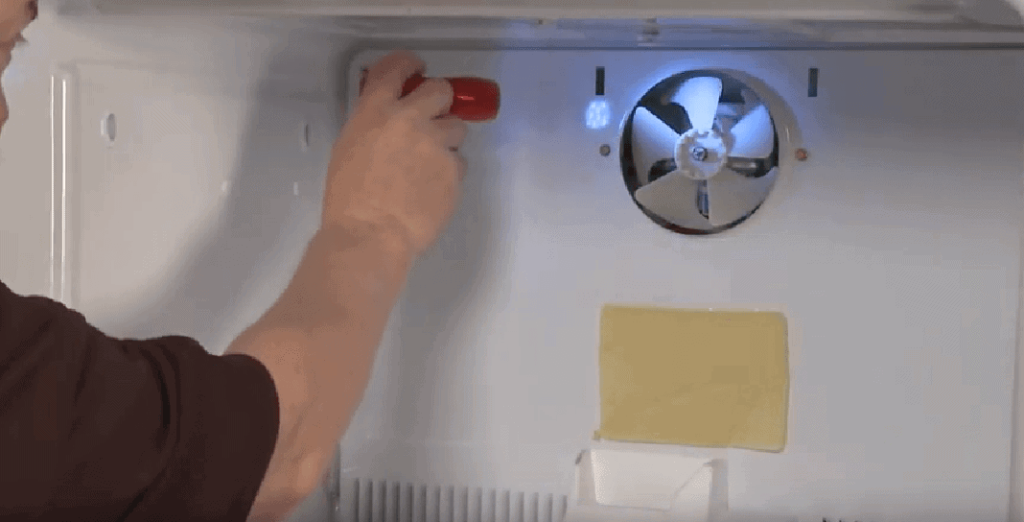
The #1 “Loud GE Fridge” Cause: Evaporator Fan Hitting Ice
What it sounds like
- A loud buzzing, humming, or sometimes a “whirring that turns into scraping”
- Often seems like it runs too often (sometimes almost constantly)
Why it happens
In many cases, the evaporator fan in the freezer starts contacting ice buildup. This can happen when defrost meltwater doesn’t drain cleanly and refreezes in the wrong place. Over time, layers of ice form, and the fan blade or fan shroud begins to hit it—creating an annoying noise.
What to check
- Remove freezer shelves/bins (as needed) and look toward the back panel
- Watch for:
- Frost/ice accumulation around vents or behind plastic covers
- A fan noise that changes when you open/close the door
Home fix (safe approach)
- Unplug the refrigerator
- Remove items from the freezer section near the back panel
- If you can access the iced area:
- Melt ice slowly using:
- a hair dryer on low (keep moving it)
- warm towels
- or a steam tool carefully
- Melt ice slowly using:
- Do not chip ice with sharp tools (easy to puncture coils and cause a major failure)
If the ice returns quickly, the underlying issue might be a drain problem, a defrost issue, or air leaks.
Buzzing Every 10–15 Minutes for 5–10 Seconds: Water Valve / Ice Maker Supply
What it sounds like
- A distinct buzz that repeats like clockwork
Common reason
The fridge is trying to fill the ice maker, but water isn’t reaching it.
Fix checklist
- Make sure the house water line is turned on
- Confirm the water line isn’t kinked behind the unit
- If you don’t use the ice maker:
- Turn the ice maker off (switch or arm, depending on model)
This one is surprisingly common and often gets misdiagnosed as a “bad fridge.”
Rattling / Buzzing From Underneath: Condenser Fan Obstruction or Vibration
What it sounds like
- Buzzing, rattling, “playing card in bicycle spokes”
- Usually from the back bottom area
What to do (quick and effective)
- Unplug the fridge
- Pull it away from the wall
- Check the rear lower area and cover panel:
- Look for debris (paper, wrapper, zip tie, etc.) near the fan
- Ensure the rear cover and drain pan are seated correctly
- Plug back in and listen again
Even a small piece of plastic or a loose panel can create a loud vibration.
A Constant Loud Hum or Drone: Leveling Feet, Floor Vibration, or Compressor Load
If the fridge is slightly twisted or touching cabinetry, a normal operating hum can become a “speaker” effect.
Fixes that often help
- Confirm the fridge is not touching the wall or cabinets tightly
- Check and adjust the leveling feet (stabilize the unit)
- Ensure shelves/bins inside aren’t vibrating against the liner
- Make sure the front grille/kick plate is clipped in fully (if applicable)
If the fridge is new, it can also run more often for the first day or two while stabilizing temperature—but it shouldn’t be painfully loud long-term.
Quick Troubleshooting Table: Match the Sound to the Cause
| Sound / Symptom | Most likely cause | Quick first check |
|---|---|---|
| Fan hitting / scraping from freezer | Evaporator fan hitting ice buildup | Open freezer door—if noise changes/stops, inspect back panel for frost/ice |
| Buzz every 10–15 minutes (5–10 sec) | Water valve buzzing due to no water supply to ice maker | Confirm water line is ON/not kinked; if not using ice, turn ice maker OFF |
| Rattle/buzz from back bottom | Condenser fan obstruction or loose rear panel | Unplug fridge, pull out, check fan area for debris and tighten/seat rear cover |
| Loud vibration when compressor runs | Fridge not level or touching wall/cabinets | Adjust leveling feet; ensure unit isn’t pressed against wall/cabinetry |
| Clicking + normal hum | Normal switching/operation | Monitor: should be occasional, not constant; verify temps are stable |
| Sudden new loudness | Obstruction, new ice buildup, or failing fan motor | Locate zone (freezer vs bottom back); check for ice/debris; if persists, consi |
When You Should Call Service
Call a technician if:
- You can’t access the fan area safely
- Ice buildup returns fast (within days)
- The fan motor is loud even with no ice present
- The fridge isn’t cooling properly
- You see heavy frost patterns repeatedly (possible defrost/drain fault)
- The noise is coming from the compressor area and is unusually loud, hot, or accompanied by poor cooling
Prevention Tips So the Noise Doesn’t Come Back
- Keep freezer drawers fully closed—small air leaks lead to frost/ice
- Don’t block freezer vents with bags or boxes
- Replace worn door gaskets if you notice gaps/condensation
- Ensure the fridge has airflow clearance behind it
- If you don’t use the ice maker, turn it off to prevent valve cycling